✝
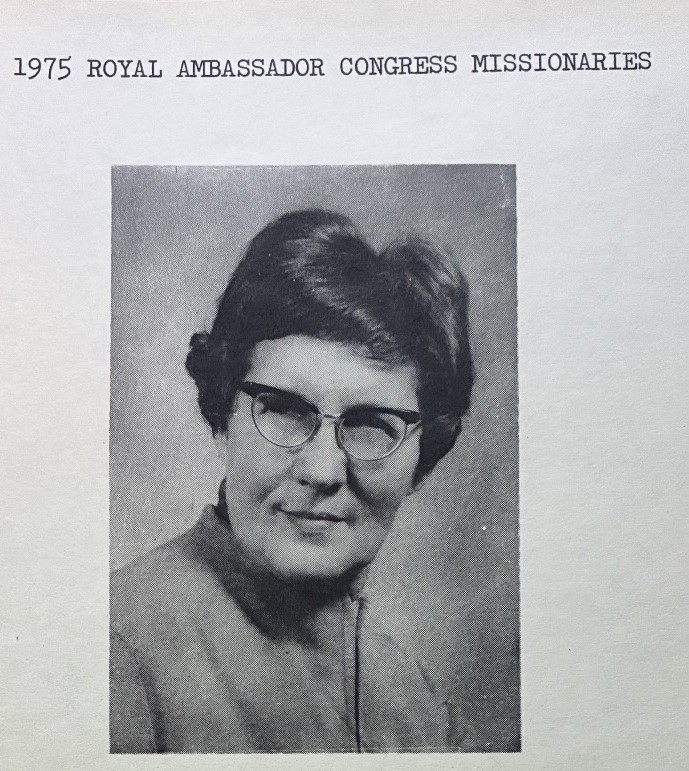
Jenell Greer
A Life of Faith
and Service
The inspiring story of a missionary who carried the authentic Gospel to Thailand for nearly thirty years.
"Go therefore and make disciples of all nations." — Matthew 28:19
Jenell Greer
The inspiring story of a missionary who carried the authentic Gospel to Thailand for nearly thirty years.
"Go therefore and make disciples of all nations." — Matthew 28:19
Her Story
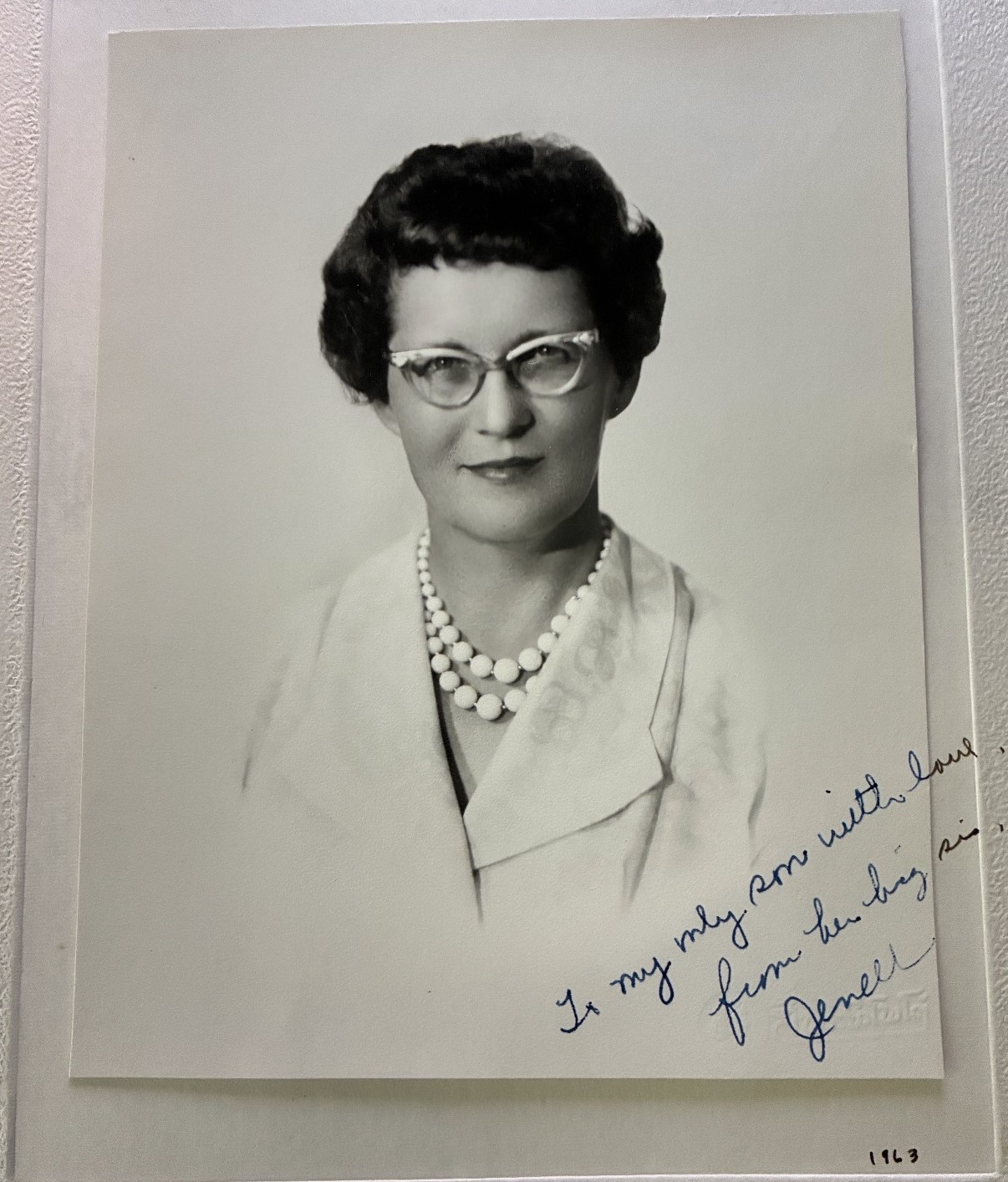
Early missionary portrait of Jenell Greer.
She spoke nine languages, a rare gift that reflected her cross-cultural calling and enabled her to teach Scripture faithfully across Asia. Some lives do not announce themselves with noise. They are built through conviction, discipline, sacrifice, and quiet endurance. That is how I have come to understand the life of my aunt, Jenell Greer. She was not famous in the modern sense, and she did not live for public attention. She lived for obedience. The record that remains of her life shows a Tennessee woman who answered God's call at a young age, prepared herself carefully, endured delay and upheaval, and then spent decades teaching the Scriptures in Asia.
For those of us in the family, and for readers discovering her story through JabezVault, she stands as more than a relative from another generation. She represents a life directed by purpose. Born in Antioch, Tennessee, educated in Baptist institutions, appointed to China during the turmoil of the Second World War, redirected through Hawaii, and ultimately established in Thailand, she followed a path that was both historically difficult and spiritually unwavering. The more closely her story is examined, the more striking it becomes. She belonged to a generation that carried the Gospel not in comfort, but through uncertainty, war, political change, and cultural distance.
The surviving missionary profile of Jenell Greer says she was born in Antioch, Tennessee. That single fact roots her story in a specific Southern world where church life, family life, and moral formation were often closely intertwined. It also tells something important about the world that shaped her: she did not emerge from an anonymous background, but from a local Christian setting that took seriously the call to service.
According to that same account, she felt God's call to China when she was only fifteen years old while studying the life of Lottie Moon. She then made that call public at Belmont Heights Baptist Church. It is difficult to overstate the importance of this moment. Many people admire a great life from a distance; far fewer allow that example to claim their own future. In my aunt's case, the life of a missionary did not merely inspire her. It redirected her. From that point forward, her life seems to have moved along a single axis: preparation for service and faithfulness to that calling.
That early decision gives shape to everything that followed. She did not wander into missionary work by accident or impulse. She gave herself to it deliberately, and she did so young. For a family member looking back across time, there is something deeply moving about that. She knew, in essence, what she was living for before many people her age had even begun to imagine their future.
Jenell Greer prepared seriously for the work she believed she was called to do. The biographical sketch from 1975 states that she graduated from Carson-Newman College and from Southern Baptist Theological Seminary in Louisville, Kentucky, with reference to the former Woman's Missionary Union Training School. These institutions were not incidental stops in her life. They were part of the making of her vocation.
Carson-Newman gave her a Baptist educational foundation, and Louisville placed her within one of the central centers of Southern Baptist theological training. This matters because her later ministry was not simply inspirational or ceremonial. She would go on to teach Old Testament and other theological subjects, even in the Chinese language. This kind of work required more than goodwill. It required study, structure, biblical literacy, and the ability to communicate complex truths with clarity and patience.
In 1942 she was appointed for China at Ridgecrest Foreign Mission Week. On paper, this may look like the triumphant launch of a missionary career. In reality, history stood in the way almost immediately. The same missionary account says that four and a half years passed between her appointment and her eventual arrival in China because the doors of the country were closed to missionaries.
That delay reveals a great deal about her character. It is one thing to feel called, prepare, and be appointed. It is another thing entirely to wait when circumstances make the fulfillment of that calling impossible in the short term. For many people, such a delay might have weakened resolve. For Jenell Greer, it appears to have deepened steadiness. She remained available for service even while the original destination was out of reach.
There is a lesson in that for any reader. Some lives are tested not first by action, but by interruption. Her story reminds us that faithfulness is not only seen in going forward. Sometimes it is seen in continuing to stand ready while the path remains closed.
The record shows that during this period of delay she served in Hawaii. A report from the Hawaii Baptist Convention states that in August 1944 Miss Jenell Greer, identified as a Southern Baptist missionary, joined the work of Waimea Baptist Church on Kauai and gave special attention to young people. This is a valuable detail because it shows that her waiting years were not wasted years.
She had been appointed to China, but while China remained inaccessible, she worked where she was needed. There is something beautiful in that flexibility. It shows that her commitment was to service itself, not merely to a romantic vision of one specific place. She was willing to labor in the assignment available to her while still holding to the larger direction of her calling.
This period in Hawaii also foreshadows what would become one of the central features of her life: ministry through teaching and formation. Working with young people was not the same as seminary teaching, but both forms of service reflected patience, investment, and the belief that lives are shaped over time rather than changed only in dramatic moments.
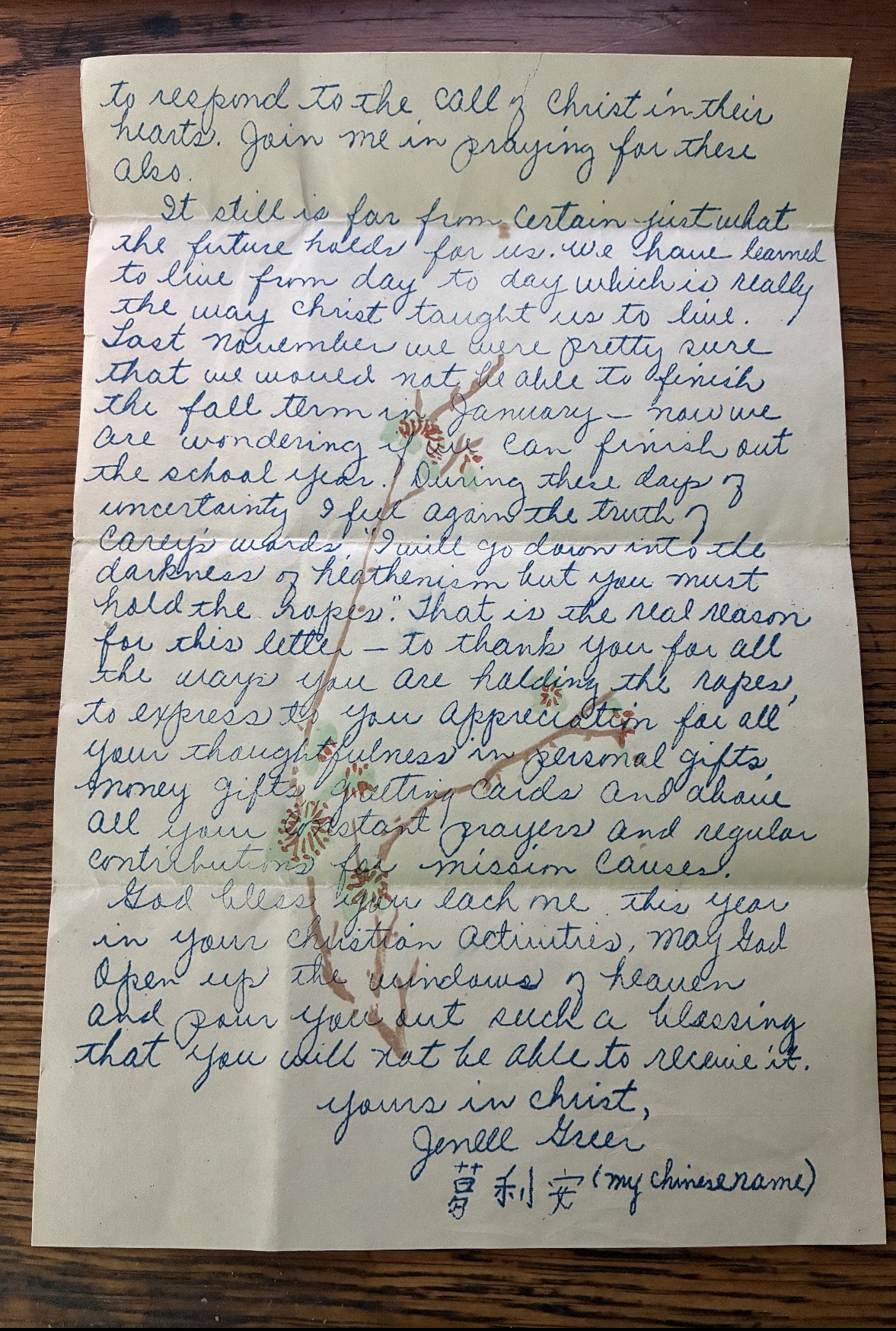
Letter from Jenell Greer, showing correspondence and mission details.
When Jenell Greer finally reached China, she served in the Girls' Mission School in Weiling in Soochow. The available account says she taught there and spent about a year and a half under the Communist occupation and takeover of China. She returned to the United States in 1950 for reassignment.
This chapter of her life carries a particular gravity. China was the field she had sensed she was called to as a teenager. She had waited years to reach it. And when she did, she entered at a moment when an entire missionary era was coming to an end. Many historical summaries describe those years in political terms, but for my aunt they were also personal. They meant teaching under uncertainty, remaining steady in the middle of change, and then leaving because circumstances beyond her control had closed the work.
What stands out most is that she did not abandon the call when the first great dream was disrupted. She did not treat the loss of China as the end of her usefulness. She accepted reassignment and went on serving. In that, her life shows a maturity deeper than idealism. She loved a place, but she loved obedience more.
In 1951 Jenell Greer went to Thailand. What followed was not a brief second chapter, but the long and defining labor of her life. The 1975 missionary profile says that she served there as a teacher of Old Testament and other theological studies in the Chinese language in a Baptist seminary. Public Southern Baptist references from later years continue to identify her with Thailand, and a 1956 Baptist paper notes her return there after furlough, listing her address on Saladaeng Road in Bangkok.
This teaching role may be the clearest window into who she became over time. She was not simply a missionary in the broad sense. She was a teacher of Scripture. She worked in the disciplines of biblical education and theological formation, and she did so cross-culturally, including in Chinese. This kind of ministry is easy to underestimate because it lacks the dramatic surface of frontier narratives. Yet it may be among the most consequential forms of missionary work, because it shapes the pastors, leaders, and teachers who will carry truth into the future.
For me as her nephew, this is one of the most compelling parts of her story. She devoted herself to work whose deepest results she may never have fully seen. Teachers often labor in hidden ways. Their influence spreads through the lives of others. If my aunt spent decades forming students in biblical truth, then her legacy lived not only in her own service but in the ministries of those she taught.
Jenell Greer's life matters because it embodies a kind of constancy that modern readers easily admire but rarely encounter up close. She responded to a call as a young woman, trained herself carefully, waited through delay, endured disruption, and then gave years of her life to the patient work of theological teaching. Her biography does not turn on celebrity or self-promotion. It turns on endurance.
That is one reason her story belongs within the world of JabezVault. JabezVault speaks of preserving sacred truth and historical witness. My aunt's life can be understood as a human expression of that same principle. She preserved biblical truth not by storing documents in a physical archive, but by carrying Scripture faithfully into classrooms, conversations, and communities across Asia.
As her nephew, I cannot pretend that a short historical record tells everything about her inner life. It does not. But it tells enough to make one thing unmistakable: Jenell Greer lived with purpose. From Antioch to Louisville, from Hawaii to China, from reassignment to decades in Thailand, the line of her life holds together. She was a woman of calling, a teacher of Scripture, and a servant whose faithfulness deserves to be remembered with gratitude and care.
Her story is worth preserving because it is true, because it is disciplined by history, and because it still carries witness. For family, it is part of our inheritance. For readers, it is an example of long obedience. For JabezVault, it is a fitting remembrance of a life spent transmitting what she believed was eternal.